
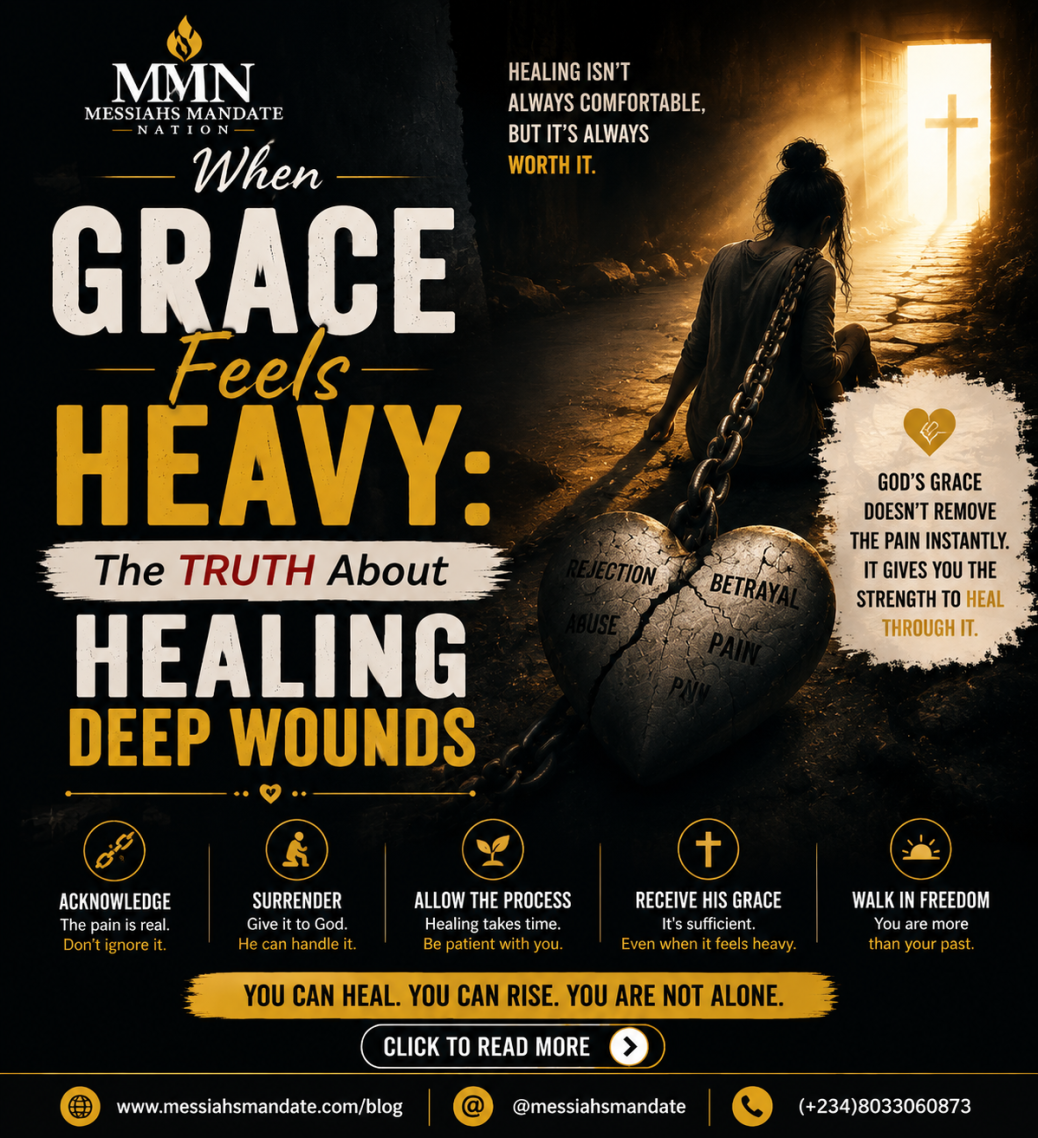
Grace is often described as light, freeing, and comforting. But anyone who has walked through deep emotional pain knows that grace can also feel heavy.
Not because grace itself is a burden, but because healing requires confrontation.
There are wounds that do not respond to surface solutions. They sit deep within the soul, shaping reactions, relationships, and self-perception. You may move forward in life, but those wounds quietly influence your decisions.
Grace does not ignore these wounds. It exposes them.
That exposure is where the weight comes from.
It forces you to face what you have avoided. It brings you into contact with memories, emotions, and truths that are uncomfortable. It challenges the narratives you have built to protect yourself.
Healing is not just about feeling better. It is about becoming whole.
That process requires honesty. It requires you to acknowledge pain without masking it. It requires you to release what you have held onto, even when it feels justified.
This is where many struggle.
They want healing without discomfort.
They want restoration without confrontation.
But real healing does not bypass the process. It moves through it.
Grace supports you, but it does not remove the responsibility to engage with your own growth.
When you allow that process, something changes.
The weight begins to lift, not because the past disappears, but because it no longer controls you.
You begin to respond differently. You begin to see clearly. You begin to live without carrying what once defined you.
That is the true work of grace.
If you are ready to confront deep wounds and walk through a process that leads to real healing, WHEN GRACE IS HARD offers guidance that is honest, practical, and transformative. Get the book and step into healing that is real, not superficial.